Importing Rubber Wheel Stops: Common Problems and How to Avoid Them
Importing rubber wheel stops can look simple. You find a wheel stop manufacturer, approve a sample, and place an order. The real problems often appear later.
The products may fail a compliance check. The rubber may crack or lose its shape. The fixing holes may be wrong. The reflective film may peel off. Poor packaging may also damage the products during shipping.
These problems increase costs and delay projects. They can also lead to complaints from installers and customers.
Most of these problems can be avoided. You need clear specifications, reliable test reports, and proper inspections. This guide explains what to check before you place an order.
Discover our full range of Wheel Stops and Parking Blocks!
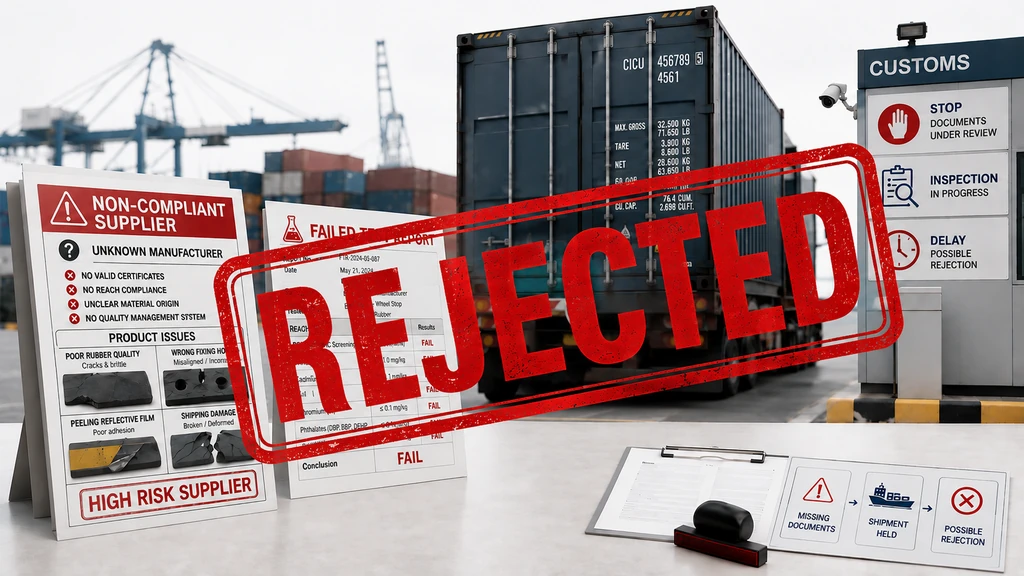
Missing REACH Compliance Can Stop Your Container at Customs
Rubber products can contain restricted chemicals. These may include PAHs, heavy metals, phthalates, and other substances.
For EU countries and Northern Ireland, check the EU REACH requirements. Confirm the rules for your destination before production starts.
Customs or market surveillance bodies may ask for compliance documents. Missing or incorrect documents can cause delays. In serious cases, the goods may be rejected.
Do not accept a simple statement such as “our products are REACH compliant”. Ask for a recent test report from a recognised laboratory.
Check the following details:
- The manufacturer’s name.
- A clear product description.
- The tested material.
- The test results.
The factory must also use the same material during mass production. A valid test report has little value if the factory changes the material formula after testing.
At Sino Concept, material compliance is checked before products enter the European market. Product records and test information are also kept for future orders.
Poor Material Quality Can Lead to Cracking, Odour, and a Short Product Life
Not all recycled rubber is the same.
Good recycled material can offer reliable performance. Poor material may contain too much filler, oil or mixed waste. This will reduce product strength and stability.
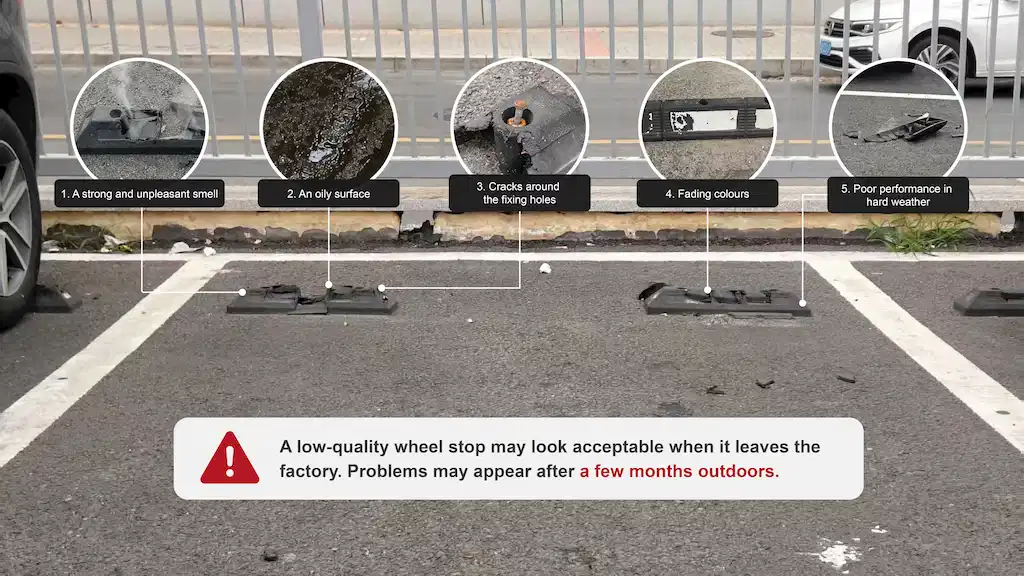
A low-quality wheel stop may look acceptable when it leaves the factory. Problems may appear after a few months outdoors.
Common signs of poor material include:
- A strong and unpleasant smell
- An oily surface.
- Cracks around the fixing holes
- Fading colours
- Poor performance in hard weather
Some rubber smell is normal. A very strong smell can point to poor raw materials or weak production control.
Ask the supplier to explain the material formula. Also ask how it controls each production batch. Keep an approved sample for future comparison.
Heavy Does Not Always Mean Better Quality
Many buyers use weight as a quick quality check. Weight is useful, but it does not tell the full story.
A heavy wheel stop may contain more good material. It may also contain a large amount of cheap filler. Filler can increase weight without improving performance.
Too much filler can make the product hard and brittle. The wheel stop may crack when a vehicle hits it.
A lighter wheel stop can also perform well. It needs the correct material, internal structure, base design, and fixings.
Compare these points together:
- Material composition.
- Density.
- Hardness.
- Internal structure.
- Wall thickness.
- Impact resistance.
Ask the supplier why the product has a certain weight. The answer should include material and design details.
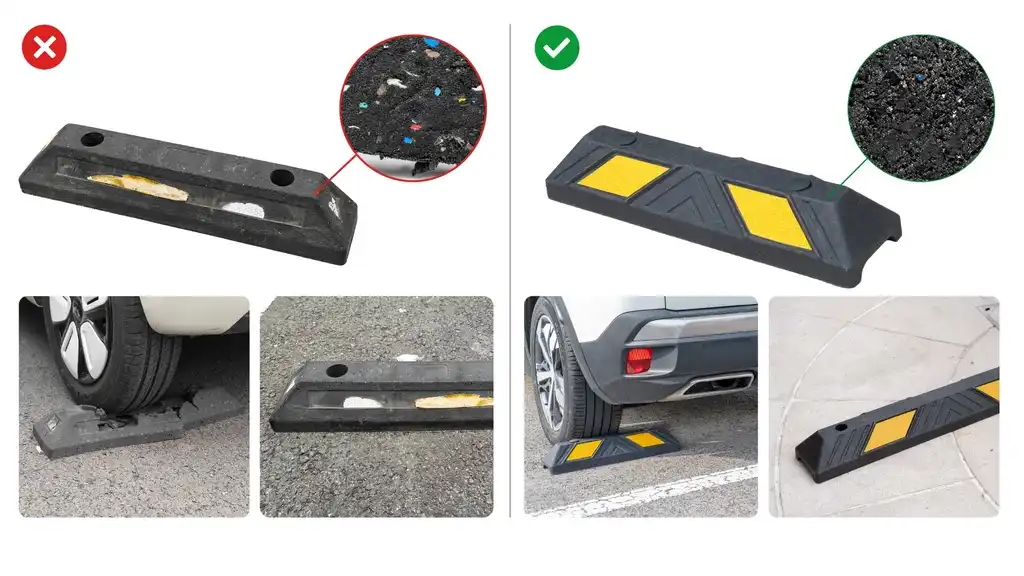
Low-Quality Rubber Can Lose Its Shape Over Time
Low-quality rubber can deform under repeated pressure. The wrong material density can make this problem worse.
This issue can affect many moulded products. It is common in cheap wheel stops.
A deformed wheel stop can create several problems:
- The body becomes flat or bent
- The surface becomes uneven
- Parts of the base lift away from the ground
- The fixing points come under extra pressure
- The wheel stop moves during use
- The product needs early replacement
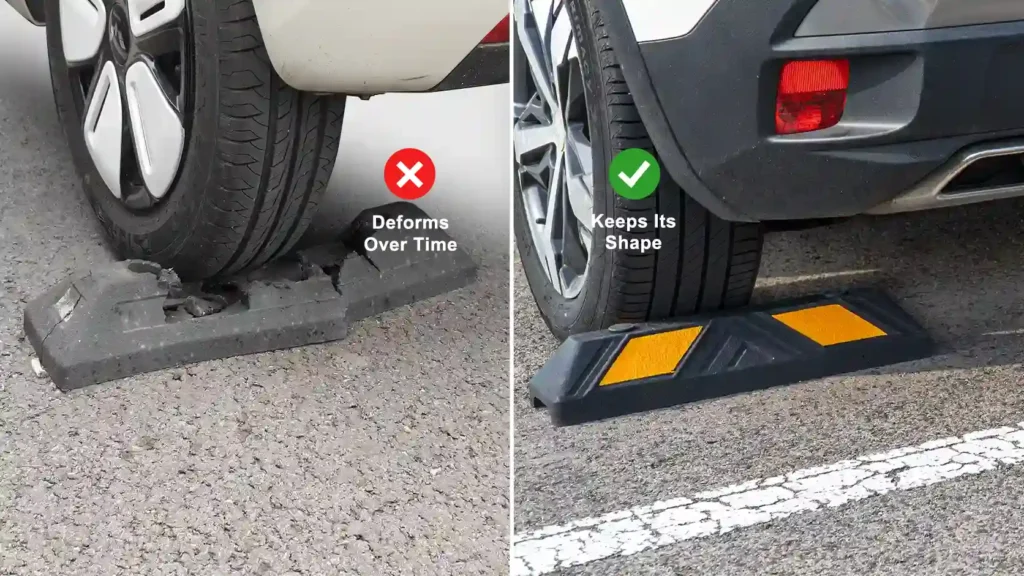
A good-quality wheel stop should keep its shape during normal use. It should remain stable in both hot and cold weather.
Sino Concept uses a controlled plastic-rubber composite formula. The formula combines flexibility with strength. Production checks help keep the hardness, shape, and performance consistent between batches.
The photo below shows a low-quality wheel stop after long-term use. The rubber has become deformed. A wheel stop can develop the same problem when the material quality or density is poor.
If the products will be used in the UK or Northern Europe, ask for low-temperature testing. Material can become much harder in winter. This can increase the risk of cracking.
Incorrect Dimensions and Poor Mould Quality Can Create Installation Problems
Small size differences can create serious problems during installation.
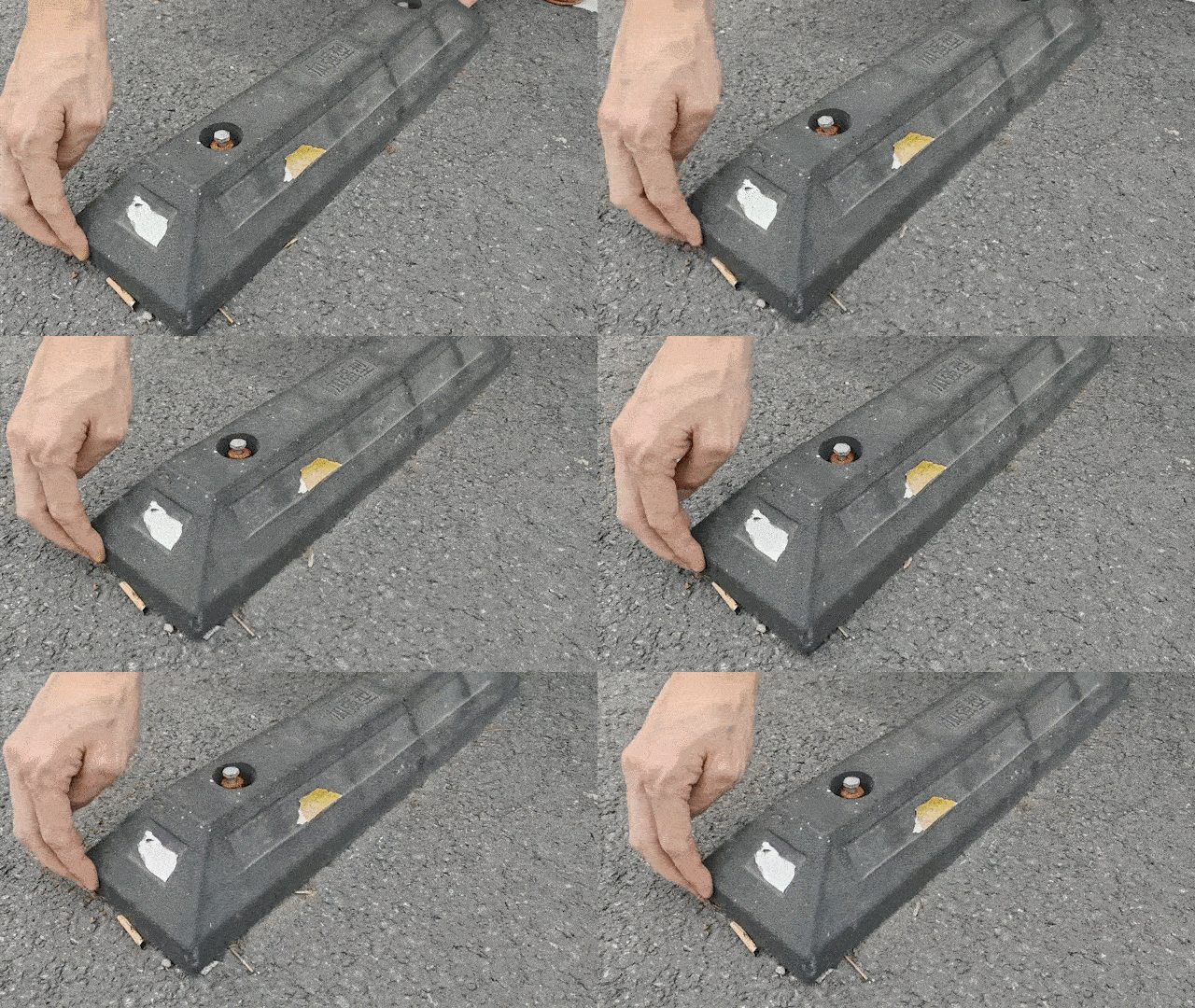
A hole may also be too small or too shallow for the bolt. This increases work time and can damage the wheel stop.
Poor moulds can cause other problems:
- An uneven base.
- Different sizes between products.
- Weak areas around fixing holes.
- A poor fit between sections.
An uneven wheel stop may rock after installation. It can also place extra pressure on the fixings.
Confirm these details before production:
- Hole diameter and depth
- Product height at the tyre contact point
- Permitted size tolerance
The mould condition also matters. Ask the factory how often it cleans and maintains its moulds. Worn or dirty moulds can reduce product quality.
Even a well-made wheel stop can be the wrong fit for the vehicles or parking layout. Before confirming your order, explore our wheel stop size explained to choose the right dimensions for your project.
Poor Fixings and Low-Quality Hardware Can Cause Installation Failures
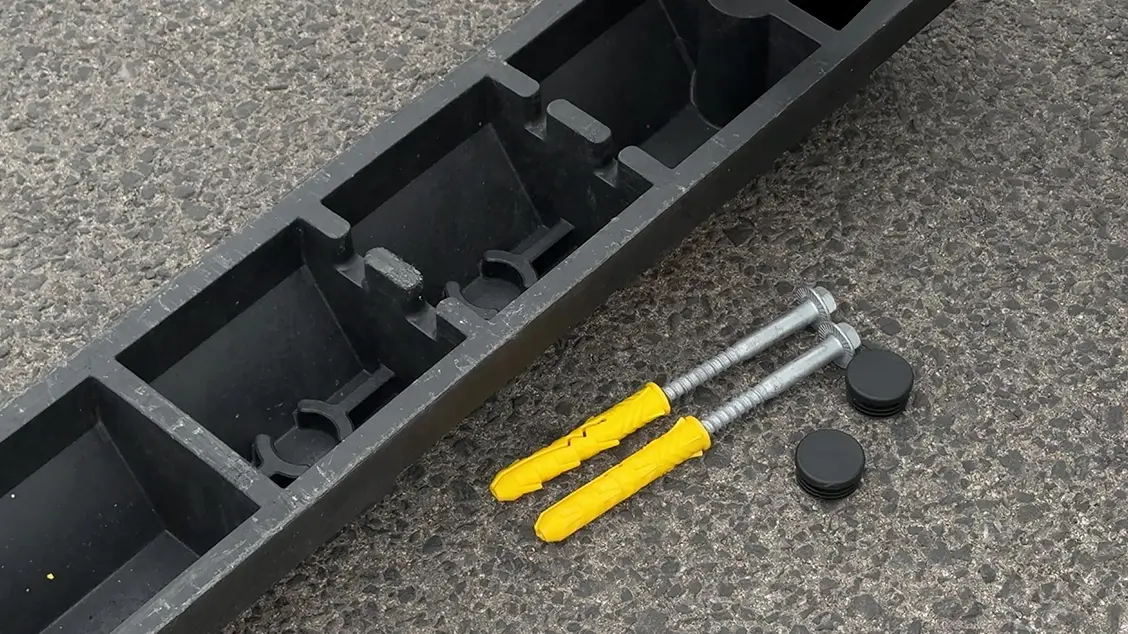
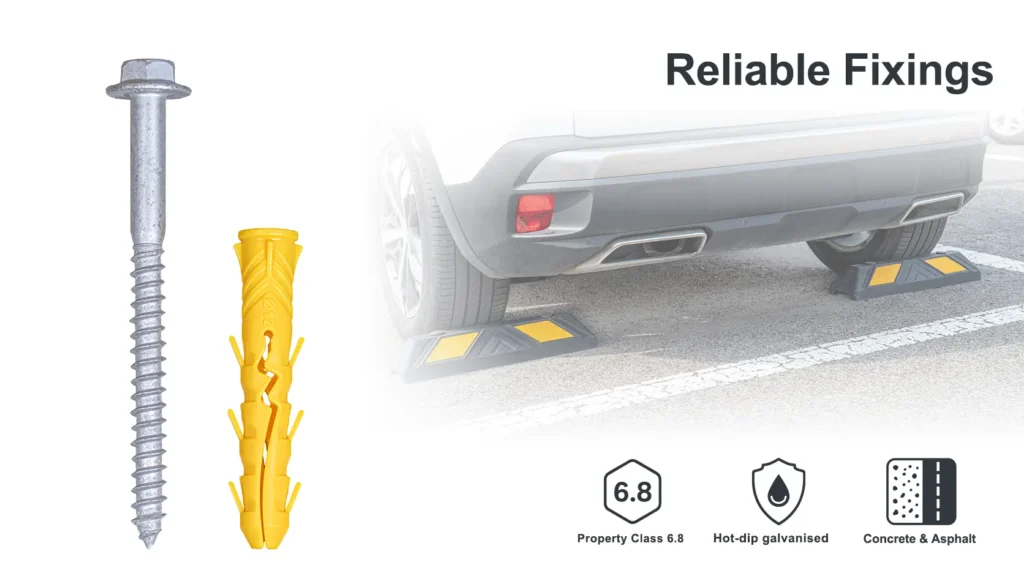
A strong wheel stop can still fail if the fixings are weak. Cheap screws may bend, rust, or break. Short fixings may not hold the wheel stop securely.
At Sino Concept, the metal parts are hot-dip galvanised. The fixings reach property class 6.8.
Hot-dip galvanising protects the steel against rust. Property class 6.8 gives the fixing reliable strength. This combination provides good durability without adding unnecessary cost.
Our aim is clear. You should receive the most durable and suitable fixing solution at the best possible cost. The cheapest bolt may save a small amount at first. It can create much higher costs after installation.
Check the following details:
- Screw material.
- Strength class.
- Surface treatment.
- Corrosion resistance.
- Concrete or asphalt use.
Before placing an order, consider the installation needs of your customers. Some projects use concrete. Others use asphalt.
Sino Concept mounting hardware is suitable for both concrete and asphalt. There is no need to select different fixings for different projects!
Reliable fixings are only part of a secure installation. Read our wheel stop installation guide for positioning and fixing instructions that help prevent movement, vehicle damage and costly rework.
Low-Quality Reflective Films Can Reduce Visibility and Product Life
Reflective film helps drivers see a wheel stop in dark or poorly lit areas.
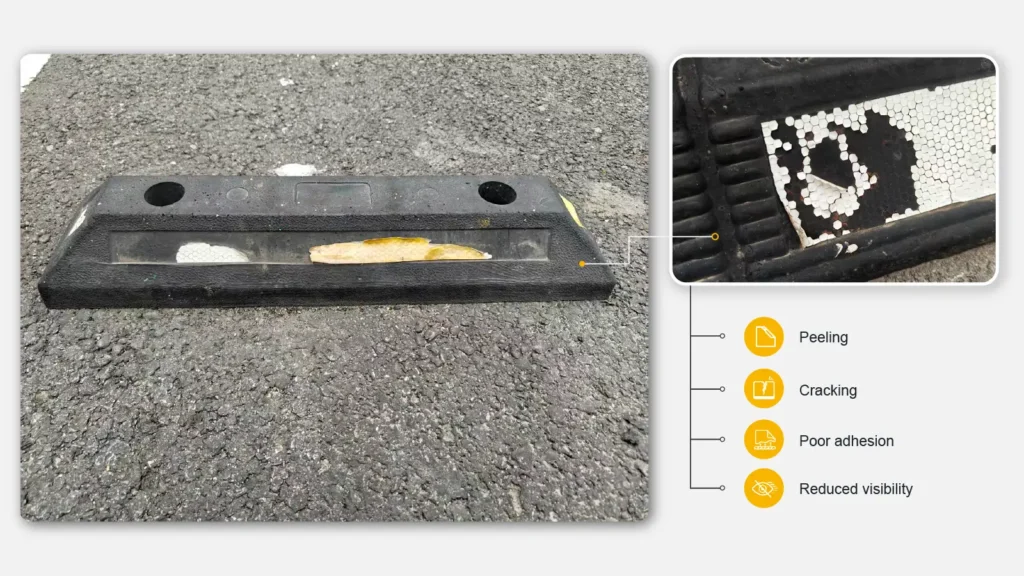
Cheap film may look bright when it is new. It can fade, crack, or peel after outdoor use. Water and dirt may enter under the edges. Vehicle tyres and cleaning machines can also damage the film.
Ask the supplier about:
- Reflective film type
- Outdoor service life
- UV resistance
- Water resistance
Check the film in daylight and low light. Take photos from different angles.
A raised edge can protect the film against scratches. A recessed film area can provide similar protection.
The product surface must also be clean before the film is applied. Oil, dust, and moisture can reduce adhesion.
At Sino Concept, we use embedded thermoplastic reflective films. They offer good visibility in low-light areas. Yellow, white, and blue options are available.
The Sample Looks Perfect, but Mass Production Can Be Different
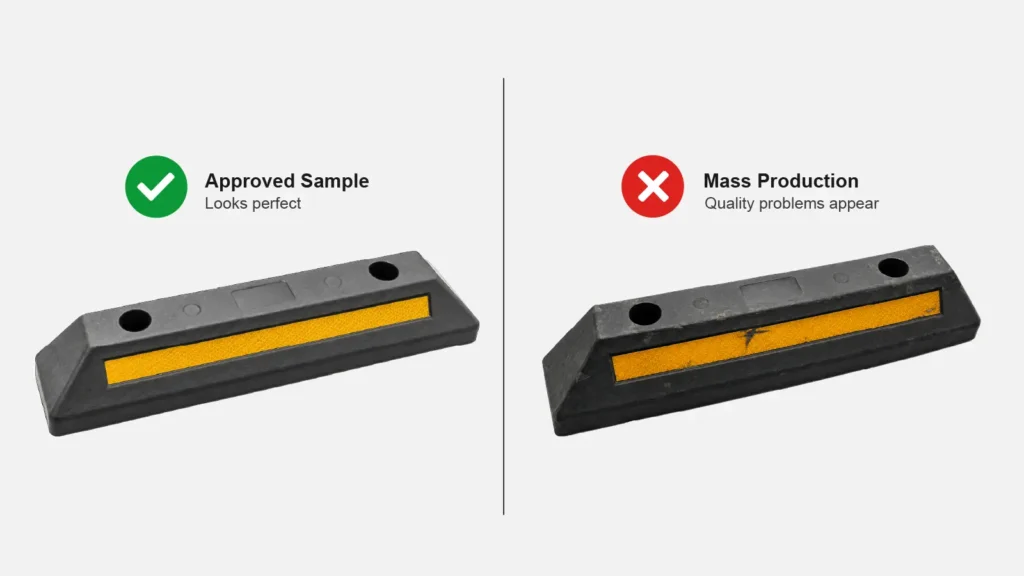
Factories often give extra attention to samples. They may use better material, a clean mould, and more careful finishing.
Mass production is different. The factory must produce hundreds or thousands of units. Weak quality control can create large differences between the sample and the final order.
Possible differences include:
- A different colour
- A stronger smell
- Lower product weight
- Different hardness
- More surface marks
- Cheaper reflective film
- Lower-quality screws
For large orders, ask the factory to send photos during production.
At Sino Concept, we carry out strict quality checks throughout production and before shipment. This ensures that every order meets the approved specification.
No Real Durability Testing Can Cause Long-Term Failures
A technical drawing cannot prove long-term performance.
Some factories only check appearance, weight, and dimensions. They do not test impact, pressure, temperature, water, or UV exposure.
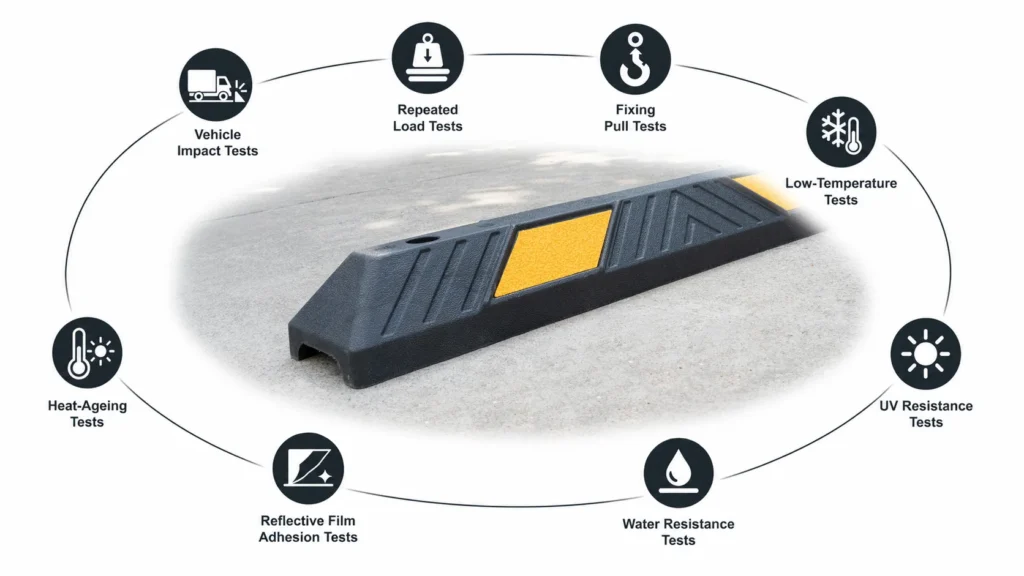
Useful tests may include:
- Vehicle impact tests
- Repeated load tests
- Fixing pull tests.
- Low-temperature tests
- Heat-ageing tests
- UV resistance tests
- Water resistance tests
- Reflective film adhesion tests
The test plan should match the final use
An HGV wheel stop needs stronger load and impact tests. An outdoor wheel stop needs weather resistance tests. A product for Northern Europe needs low-temperature tests.
Ask for test reports, photos, and videos. Check the test date and product model.
The tested product should come from normal production. A specially made sample may provide better results than the products in your order.
Sino Concept carries out production and final inspections in-house. This helps keep quality consistent across repeat orders and large projects.
Poor Packing Can Cause Damage Before the Products Reach You
Rubber wheel stops are strong, but poor packing can still damage them.
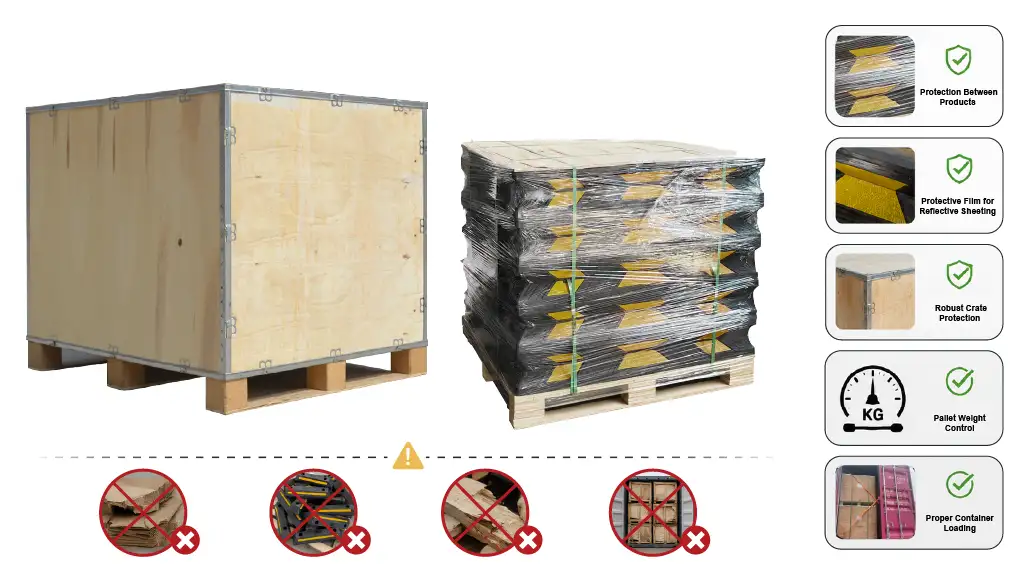
Products may rub against each other during sea transport. Reflective films may become scratched. Corners may break. Loose metal parts may damage the surface.
Agree on a packing plan before production. Check:
- Carton strength
- Pallet weight
- Container loading method
Loose-loaded products can be damaged more easily. They also take longer to unload, increasing labour costs. Our logistics solution helps protect your products and makes unloading quicker and easier.
Ask for photos of the first packed products. Do not wait until the container is fully loaded. Good packing has a cost. However, it reduces damage and customer complaints.
How to Choose a Reliable Rubber Wheel Stop Supplier
A reliable supplier does more than offer a low price. It helps you control risk before production starts.
The supplier should give clear answers about materials, compliance, moulds, dimensions, fixings, testing, and packaging.
Before placing an order, ask these questions:
- Is there a valid REACH test report?
- What tests are carried out?
- Are the fixings suitable for the installation surface?
- Is the reflective film suitable for outdoor use?
- How are the products packed?
- Can the supplier keep the same quality for repeat orders?
Do not compare unit price alone. Calculate the full landed cost.
Include:
- Customs risk
- Inspection cost
- Installation time
- Replacement cost
- Customer complaint costs
A slightly higher unit price may reduce your total cost. Better material, reliable fixings, and stronger packaging can prevent expensive failures.
A successful order should meet four basic conditions. The goods should pass compliance checks. They should arrive without damage. They should be easy to install. They should continue to perform for years.
Sino Concept manufactures wheel stops in China with direct European management. We supply distributors and wholesalers in the UK, Europe, and other international markets. We also understand European compliance, packaging, and installation requirements.