

Standard vs Heavy-Duty Speed Bumps: Which One Should You Choose?
When choosing Sino Concept speed bumps, you might wonder: if standard and heavy duty speed bumps look almost identical, why do we have two different versions?
The answer is inside the mould.
Both versions use the same plastic‑rubber material, the same outside dimensions, and the same modular design. But their internal structures are built differently to meet different needs.
These internal differences affect weight, load capacity, and extra features. Understanding them helps you pick the right solution for your business.
Discover our full range of Speed Bumps and Speed Humps!
What’s Different and What’s the Same?
We use the Sino Concept 7 cm speed bump as an example here:
| Feature | Standard Speed Bump | Heavy-Duty Speed Bump |
|---|---|---|
| Middle section size | 500 × 400 × 70 mm | 500 × 400 × 70 mm |
| End section size | 250 × 400 × 70 mm | 250 × 400 × 70 mm |
| Material | Plastic-rubber composite | Plastic-rubber composite |
| Middle section weight | 9 kg | 12 kg |
| Manufacturer-rated load capacity | 20 tonnes (44,000 lbs) per axle | 40 tonnes (88,000 lbs) per axle |
| Built-in cable channel |
 No |
 Ø35 mm channel |
| Modular connection |
 Standard and Heavy-duty versions are fully compatible and can be used together. | |
Differences Between Standard and Heavy-Duty Versions
The main differences between the two versions come from 3 aspects:
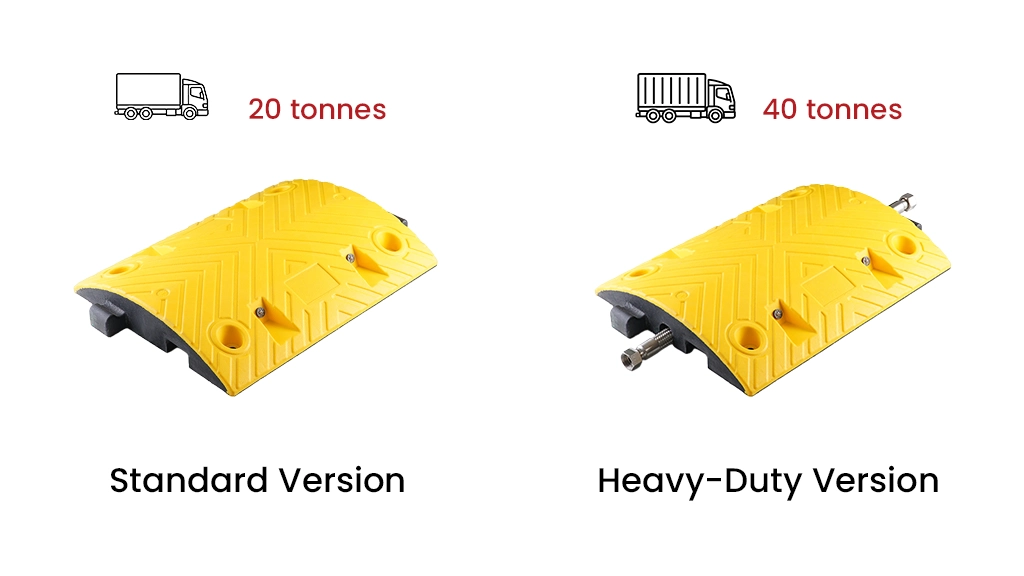
Different Load Capacity Ratings
Load capacity is an important factor. It affects safety and durability.
Standard Version – 20 tonnes: Suitable for sites where lorries cross a few times a day, such as supermarket delivery areas at Lidl and Carrefour.
Heavy-Duty Version – 40 tonnes: Ideal for constant heavy truck traffic at major logistics centres, such as Amazon and IKEA warehouses.
A higher rating is not always necessary. The best choice depends on your actual traffic.
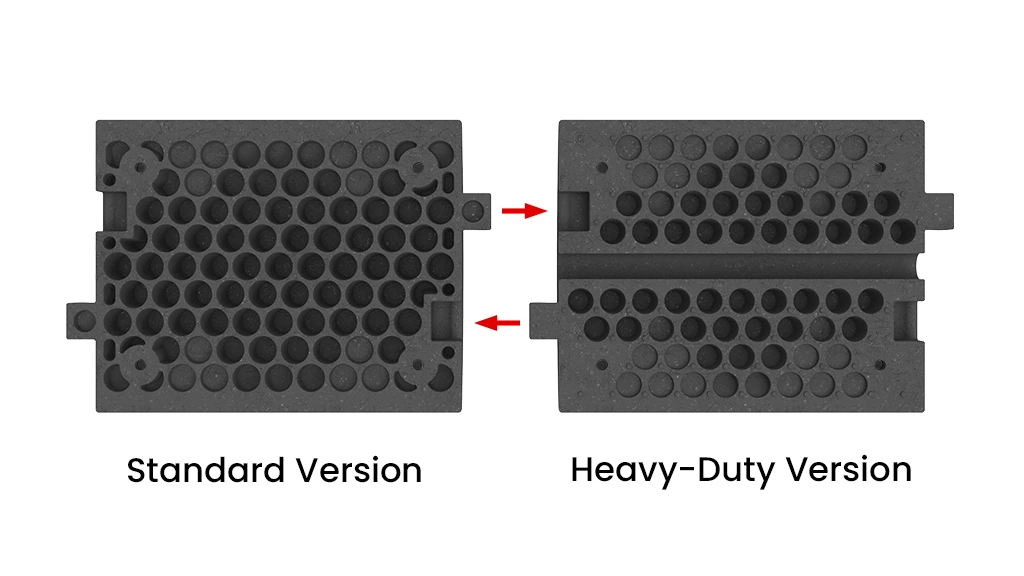
Different Internal Support Structures
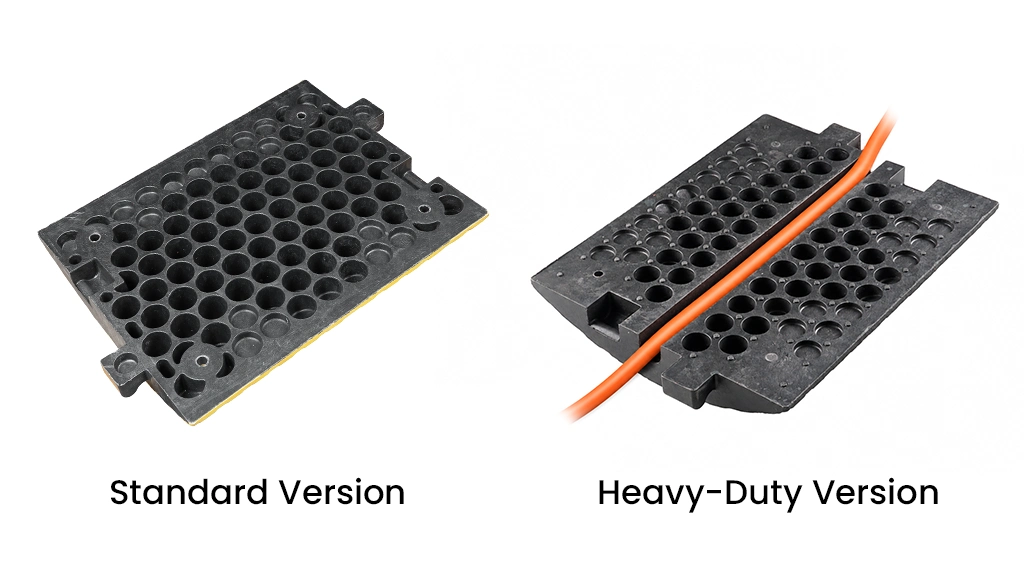
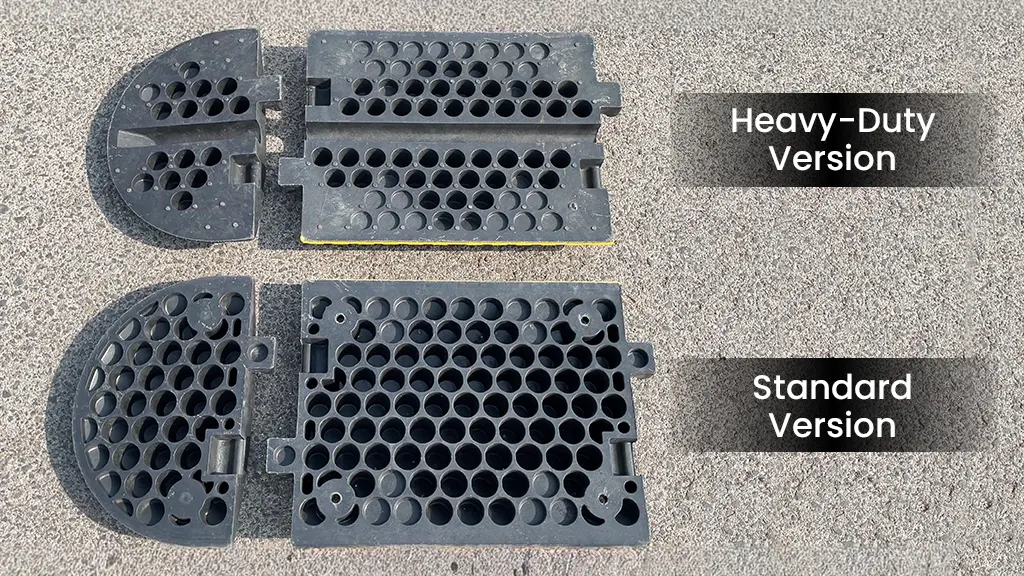
Even though both versions have the same external dimensions, their bottom structures are not the same.
The heavy‑duty version uses a denser circular support design.
That is why the heavy‑duty version is heavier (12 kg vs 9 kg) and has a higher load rating.
Built-In Cable Channel
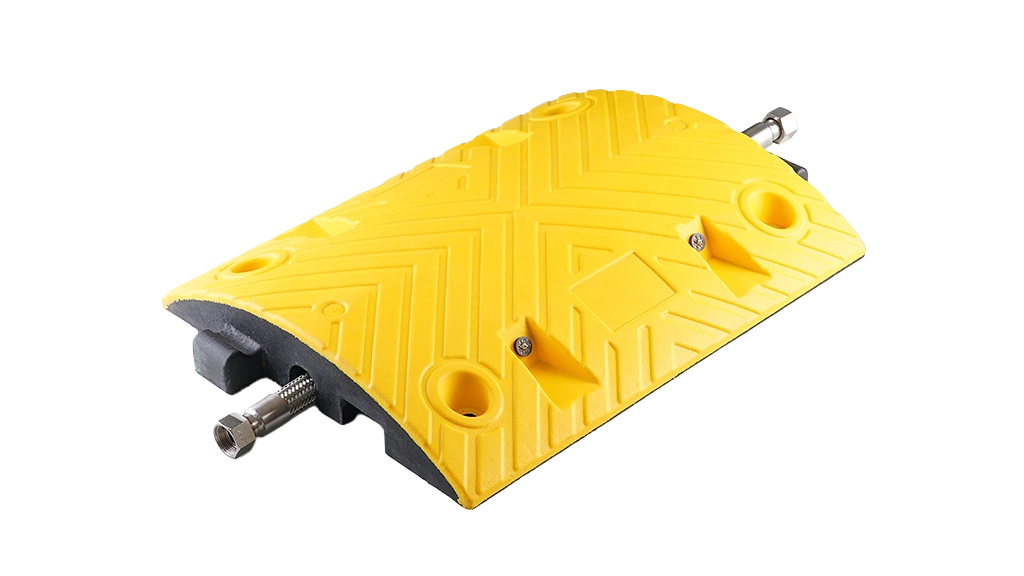
The heavy-duty version includes a Ø35 mm cable channel inside the middle part. The standard version does not have this.
This channel lets you run cables or wires through the speed bump instead of laying them on the road.
What Both Versions Have in Common
Both versions have the same size, the same yellow cover and the same connection system. They are also REACH compliant, like all our products.
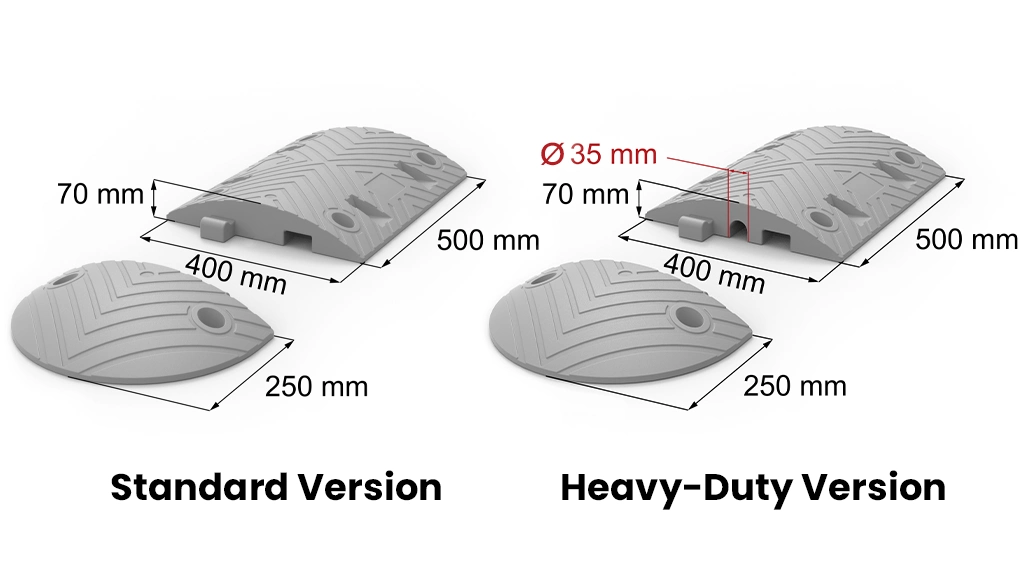
Same Dimensions
- Middle part: 500 × 400 × 70 mm (19.7 × 15.7 × 2.8 in)
- End cap: 250 × 400 × 70 mm (9.8 × 15.7 × 2.8 in)
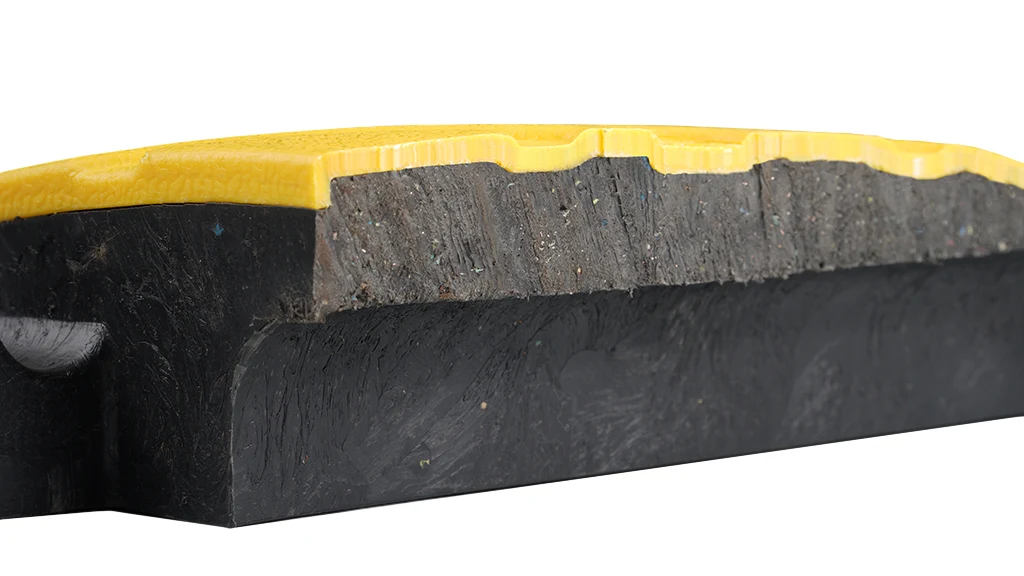
Same Yellow Cover
The standard and heavy-duty versions use the same yellow cover, offering the same level of durability.
On both versions, the yellow colour is moulded into the material.
Fully Compatible
Both versions use the same built-in interlocking system.
The same design makes it easier for distributors to manage stock and meet different customer needs.
Standard Version Is Still a Practical and Cost-Effective Choice
The standard version is not a “light-duty” product. It is a practical choice for sites where heavy-duty capacity is not required.
Here is why it makes sense for many projects:
Lower total cost: No cable channel, no extra support. You only pay for what you need, leaving more budget for other safety products such as bollards and signs.
Easier to install: at 9 kg per section, one person can handle two pieces. This reduces labour hours on larger projects. You can find more on our speed bump installation guide.
Widely used and trusted: thousands of standard speed bumps are in warehouses, industrial estates and supermarket delivery areas across Europe. It is a mature product with a solid track record.
Plan your orders around actual customer demand. Choosing the right mix of Standard and Heavy-Duty models helps meet different needs while avoiding unnecessary costs.
Conclusion
Standard and heavy-duty speed bumps may look almost identical from the outside, but every detail inside is designed for a specific purpose.
The standard version provides reliable performance for general applications, while the heavy-duty version offers additional capacity and functionality for more demanding environments.
At Sino Concept, we believe a good product is not only about adding more features. It is about thoughtful design, reliable performance and creating the right solution for every project.
